
Swimming progress can be difficult for parents to judge. One week a child seems confident, the next week they hesitate. Some children move through skills quickly, while others appear to stall. This uncertainty often leads parents to question whether lessons are working or whether their child is falling behind. Over many years of watching lessons across different swim schools, I have seen the same misunderstandings come up time and again. These misunderstandings are not about lack of care. They come from not fully understanding how swimming skills develop. This is why parents searching for swimming lessons near me often benefit from programmes like those outlined at swimming lessons near me, where progress is measured in confidence and control rather than speed alone.
As someone who has followed children’s swimming development closely and observed many teaching approaches, I have become careful about what I recommend. Schools that explain progress clearly and calmly tend to build stronger swimmers over time. Those that rush milestones often create frustration for both children and parents.
Progress in swimming is not linear
One of the most common misunderstandings is expecting steady improvement every week. Swimming does not work like that. Children often make progress in bursts. They may practise the same skill for weeks and then suddenly improve.
This pattern can worry parents who expect visible change at every session. In reality, the body and brain need time to absorb new sensations. Water changes balance, breathing, and movement. These changes take longer to process than many land based skills.
Periods that look like a lack of progress are often periods of adjustment.
Confidence develops before visible skill
Parents often look for distance or strokes as signs of success. While these are useful markers, they are not the foundation of swimming. Confidence comes first.
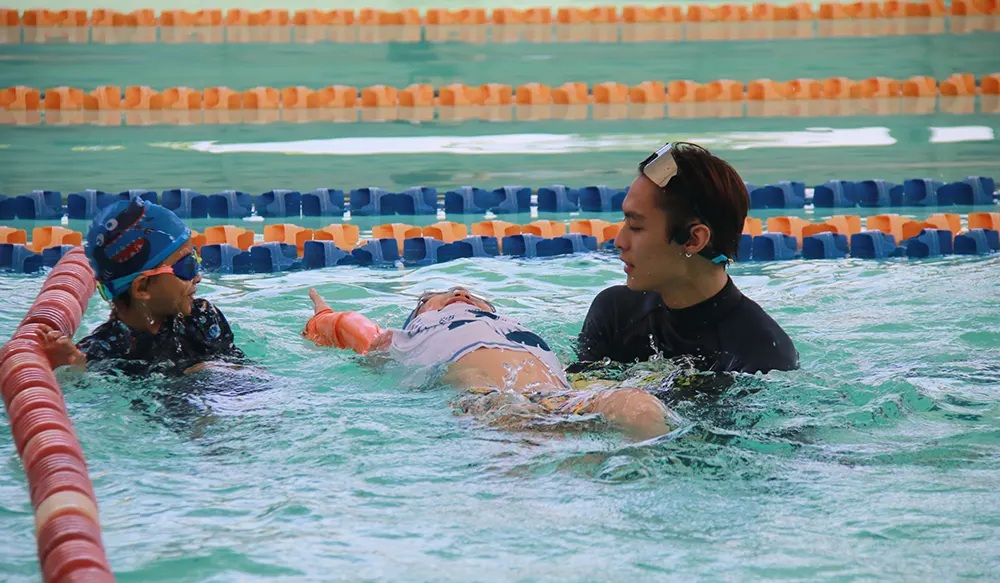
A child who relaxes in the water, floats with ease, and breathes calmly has made real progress, even if they have not yet swum far. These skills are harder to spot from poolside, but they matter more than speed or distance.
Strong swimming lessons focus on these hidden foundations before moving on.
Comparing children creates false expectations
Every child learns at a different pace. Comparing siblings or classmates often leads to unnecessary concern. One child may have better balance. Another may have stronger coordination. Another may simply feel more relaxed in water.
Comparisons ignore these differences. They also add pressure to the child. Children sense expectations even when they are not spoken. Pressure increases tension, and tension slows learning.
Swimming progress should be judged against the child’s own starting point, not someone else’s.
Age alone does not determine readiness
Parents sometimes assume that older children should progress faster. Age helps, but it is not the deciding factor. Water confidence, prior exposure, and emotional readiness matter more.
A younger child who has spent time playing in water may progress faster than an older child who is new to the pool. This does not reflect ability. It reflects familiarity.
Good instructors assess readiness rather than age.
Fear can temporarily slow progress
Many children reach a stage where fear briefly increases. This may happen when they attempt deeper water, remove a float, or change breathing patterns. Parents often see this as regression.
In fact, this stage is common. The child becomes more aware of the water and their own limits. With patient guidance, confidence usually returns stronger than before.
Progress sometimes looks like a step back before a step forward.
More lessons do not always mean faster progress
Some parents believe adding extra sessions will speed things up. While consistency matters, too many sessions can overwhelm some children.
Swimming requires recovery time. Children need space to process what they learn. Weekly lessons often provide the right balance between exposure and rest.
Quality and structure matter more than frequency.
Stroke perfection comes later than parents expect
Parents often focus on how a stroke looks. Bent arms, uneven kicks, or lifted heads can cause concern. At early stages, these imperfections are normal.
Before technique improves, children need balance, breathing control, and relaxed movement. Once these are secure, technique refines naturally.
Correcting technique too early can increase tension and reduce confidence.
Progress is easier to feel than to see
Some improvements are internal. A child may feel calmer entering the pool. They may recover faster after a splash. They may trust the instructor more.
These changes matter. They indicate growing confidence. Even if outward skills look similar, internal progress is happening.
Experienced instructors watch for these signs and adjust lessons accordingly.
Breaks can affect confidence more than skill
After holidays or illness, parents often worry when children seem hesitant again. This does not mean skills are lost. It means confidence needs refreshing.
Water confidence fades faster than physical ability. With a few calm sessions, most children regain their comfort.
Understanding this helps parents avoid unnecessary worry.
Pushing milestones can backfire
Some parents set clear targets such as swimming a length by a certain age. While goals can motivate, fixed deadlines create pressure.
Children who feel pushed often develop tension. Tension interferes with breathing and balance. This slows progress rather than speeding it up.
Milestones should guide instruction, not force it.
Float aids are not a measure of failure
Parents sometimes worry if their child still uses floats or supports. These tools are not signs of weakness. They allow children to practise movement without fear.
Used correctly, float aids support confidence and balance. They are removed when the child is ready, not according to a schedule.
Judging progress by the absence of aids misses the purpose they serve.
Group dynamics influence progress
Children behave differently in groups. Some thrive on social energy. Others become quiet. A child who appears slow in one group may progress quickly in another.
Group size, noise level, and instructor interaction all affect learning. This is why well structured programmes pay close attention to class setup.
In the middle of this discussion, it is worth noting that programmes outlined on the swimming lessons page place strong emphasis on class structure and calm progression. From what I have seen, this approach helps parents better understand how progress really works.
Parents often underestimate the impact of routine
Routine creates familiarity. Familiarity reduces stress. Stress reduction improves learning.
When lessons happen at the same time each week with the same instructor, children settle faster. Progress becomes smoother.
Irregular attendance or frequent changes can interrupt this rhythm and make progress appear slower than it truly is.
Praise matters more than correction
Parents naturally want to help by pointing out mistakes. In swimming, too much correction can overwhelm a child.
Positive reinforcement builds confidence. Confidence supports skill development. Corrections should come from instructors who can time them well and keep them simple.
Parents who focus on effort rather than outcome support healthier progress.
Progress is not the same as enjoyment
Some parents worry if their child seems playful rather than focused. Play is not a lack of progress. Play helps children explore water safely.
Enjoyment often precedes skill development. A child who enjoys swimming stays relaxed. A relaxed child learns faster.
Structured lessons balance play with learning rather than choosing one over the other.
Confidence fluctuates with growth stages
As children grow, their body changes. Balance shifts. Coordination adjusts. Skills may temporarily feel harder.
These stages are normal. They do not mean lessons are failing. They mean the child is adapting.
Understanding this prevents unnecessary concern during natural transitions.
Parents sometimes misread instructor silence
When instructors do not give frequent updates, parents may assume nothing is happening. In reality, instructors often observe quietly to allow children to learn through experience.
Good instructors step in when needed and step back when appropriate. This balance supports independence.
Clear communication helps parents understand this approach.
Swimming progress is cumulative
Every session builds on the last. Even sessions that seem quiet add value. Skills layer over time.
Looking at progress over months rather than weeks gives a clearer picture. Children who build strong foundations progress further in the long term.
Why clear guidance helps parents relax
Parents feel more confident when they understand the learning process. Schools that explain progression calmly help reduce anxiety.
They set realistic expectations and focus on safety and confidence first.
This clarity makes the swimming journey more enjoyable for families.
A balanced view of progress
Swimming progress is not a race. It is a gradual process shaped by confidence, familiarity, and trust. Children move forward when they feel safe and supported.
From years of observation, I have found that schools offering structured swimming lessons in Leeds such as those detailed at swimming lessons in Leeds tend to manage expectations well and support steady progress.
When parents understand what progress really looks like, they worry less and enjoy the journey more. Children sense this calm and respond with confidence. In swimming, that confidence is the key to lasting success.